
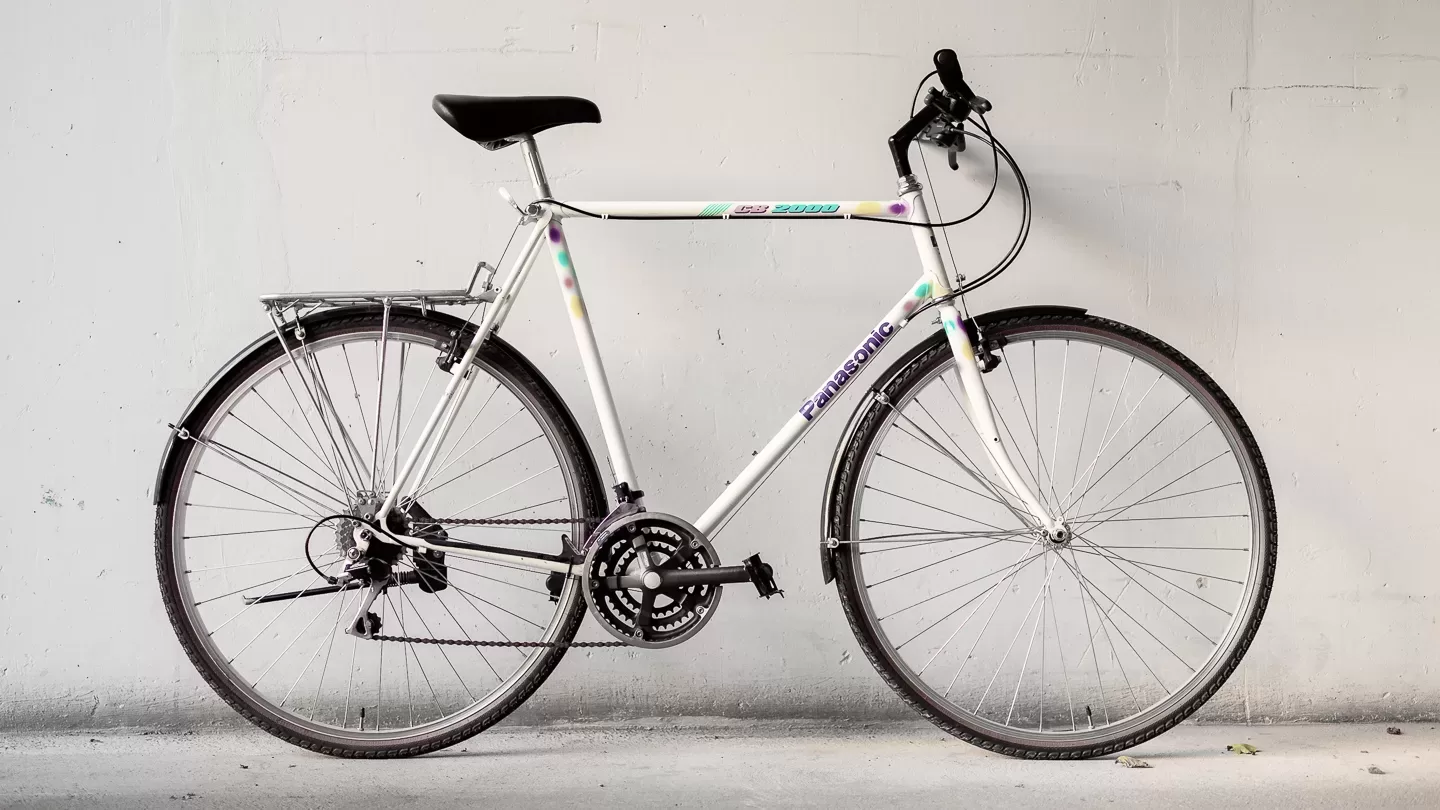
Panasonic bicycles have occasionally been referred to as “toaster bikes.” Well, the Japanese multi apparently has a strong reputation in the household appliance sector…while its expertise in the bike industry seems to be less well-known.
In fact, Panasonic is a major supplier of bikes and cycling equipment, a role that harks back to the 1960s. Since then, no fewer than 15 million bicycles have rolled off its production lines. In the 1970s and 80s, its bikes gained such a good reputation that the company became the official supplier to the Japanese cycling team at the Olympic Games.
Panasonic’s venture into the bike market is linked to its founder, Konosuke Matsushita. The young Konosuke grew up in a family that ran a bike shop. In 1918, he established what would become today’s Panasonic Corporation. The first bestseller was a battery-powered bicycle lamp.
After World War II, Konosuke Matsushita channeled the Panasonic bicycles business into two subsidiaries: Panasonic Cycle Technology (founded as National Bicycle) which makes bikes and cycling accessories, and the Panaracer Corporation (founded as National Tire), which produces tires and tubes.
When the baby boomer generation was coming of age in the 1970s, cycling became a popular leisure activity. In the USA, bike sales surpassed car sales, in volume, not in sales. This was during the “bike boom”. A decade later, the Japanese bike industry was in decline. In 1985, the Plaza Accord, a massive revaluation of the yen against the dollar, sending shockwaves through Japanese industry. Effectively, it forced manufacturers to outsource production to low-wage countries. Since then, Taiwan and later China have become the world’s bike workshops.
At the same time, a new type of bicycle began to eat into sales of classic touring and road bikes: the MTB, or mountain bike. The MTB boom was primarily driven by U.S. manufacturers. Road bikes, traditionally been a stronghold of the Japanese, were on decline.
In 1989, founder Konosuke Matsushita died at the age of 94. Distribution of Panasonic bicycles in North America was discontinued. A few years later, sales in Europe also ceased.
Today, the Osaka-based company focuses its bicycle activities on the East-Asian market. The current catalog of Panasonic bicycles includes at least one product that bears a strong resemblance to the company’s earlier road bikes. It can be ordered in exactly the same corporate racing livery as 30 years ago. The lugged frame is made from Tange Prestige tubing. That’s exactly the stuff its predecessors were based on.
If you want to get a glimpse of what bike production in Japan was like back in the day: There is a promotional video from the 1980s that shows the manufacturing process at a Panasonic bicycles plant in detail. The Panasonic Virtual Bike Museum has more such memorabilia, including scans of historic sales brochures.